NEW "project"

Gary

SE Kansas
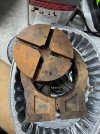
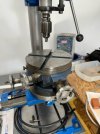
Small project that can come in handy, refurbing an old Palmgren Rotary Table. I was watching FB Marketplace a couple of days ago and saw a Rotary Table listed and the seller lived about 35 miles from me so I DM,d the seller and SHE responded that the item was pending. I thanked her and said if the buyer decides to pass on the item I'd buy it. Next day I get a notification from FB (the seller) and she said I could have it cause the first guy decided he didn't want it. I replied with some specific questions such as does the table turn, what size is the table, ect. Crickets. I DM'd again asking if I could pick it up today; she replied that she wasn't sure where she would be and said she'd leave it outside in a "package box" by the door. Got there and unfortunately the FB pictures were fairly accurate, rust everywhere. Went ahead and left the payment in the box and drove home.
So, today after securing a gallon of Evapo-rust I started the tear down first lubing all the screws. Actually came apart fairly easily, took a couple of taps with a 1.5" pipe nipple using a rubber mallet and the table part came off. All the little parts along with the table are soaking now.
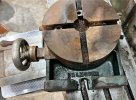
Turns out the table is 8" and should fit nicely on the Mill table.
Here's a picture prior to disassembly and with it apart.
 

Attachments

  • PALMGREN TABLE.jpg
    PALMGREN TABLE.jpg
    122.6 KB · Views: 15
  • PALMGREN.JPG
    PALMGREN.JPG
    199.5 KB · Views: 15
Evapo-rust is doing a fair job but I am going to have to buy some precision flat stones to go over the deck of the table. Probably going to be able to start buffing out some of the smaller parts tomorrow.
If you have a bench stone of suitable composition and just want to be sure it is flat, scrounge up a 12"x12" piece of steel plate 1/2" or 3/4" thick, you don't want it flexing. Put a spoonful of medium or fine grit valve lapping compound on the plate, dribble a little kerosene on to thin, hold your stone in one hand and with a bit of pressure start doing figure eights, work over the entire plate. You need to switch hands fairly often, this will help keep your stone parallel. When done, wash the grit away with kerosene. This is how we treat our stones in the shop when they get too loaded up to cut well, keeps them flat all the time. Works great when we find a good stone cheap, yard sale or swap meet usually with a good sized swale in in it from only ever sharpening knives.
 
Dave gives good advice. I bought a pair of Norton bench stones which were pretty flat already and rubbed them against themselves to knock off the high spots, checking very carefully against a lightly blued precision granite plate. I douse them in paint thinner and rub them together a few times to dress them before dressing my tables, ways, gibs, or anything else that needs the high spots knocked off. If too high for the stone, the scrapers come out.
 
Finally got it cleaned off and reassembled and dialed in ( that was a project in itself). Only thing left is to flatten the top to take out the last of the rust and discoloration on the top.